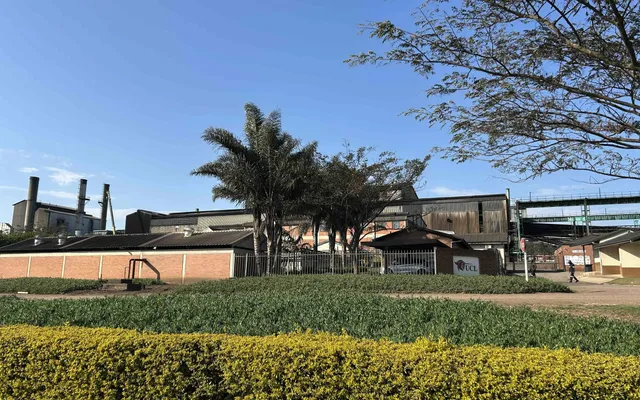
In a cane sugar mill in upper northeastern Thailand, SeedMaster-4 was installed on a 60 t batch vacuum crystallizer producing C seed magma. In cane sugar production, C seed is a strategically important intermediate product, because it forms the starting point for subsequent crystallization stages and has a direct influence on overall C-side performance, molasses exhaustion, and sugar losses.
The C2 crystallizer was used to produce seed magma with a target crystal size of approximately 0.22 mm. The pan was seeded with 0.01 mm wet milled slurry, and the resulting C seed magma was then pumped to a subsequent horizontal continuous vacuum crystallizer for C magma production.
Original process challenge
Under the traditional control strategy, the C2 crystallizer was operated with periodic additions of syrup and water. This resulted in a stepwise pan level profile and unstable supersaturation conditions. During the early phase of the batch, supersaturation reached excessively high values, entering the labile zone and causing spontaneous nucleation.
As a consequence, fine crystals were formed. To compensate for this, water was added intermittently to wash out the fines. While this practice can help manage crystal quality problems, it has a serious disadvantage: it increases steam demand and reduces thermal efficiency, because the added water must be evaporated again during the boiling process.
SeedMaster-4 implementation
The C2 crystallizer was already equipped with a microwave probe, vacuum pressure measurement, and level measurement. To enable supersaturation-based control, a Vaisala POLARIS PR53 process refractometer was installed in the W-shaped bottom of the crystallizer to measure the liquid phase concentration and temperature. A flexible hot condensate washing line was also added for automatic cleaning of the refractometer prism.
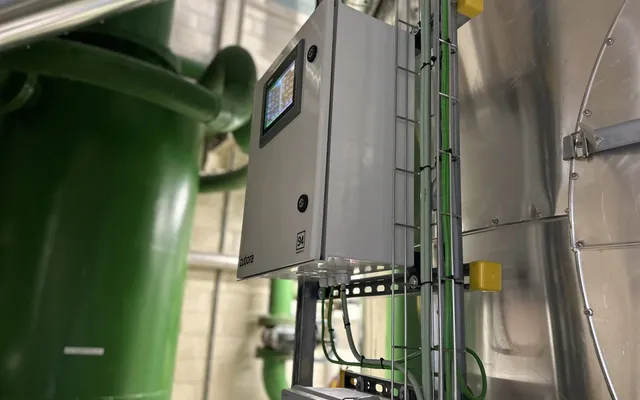
SeedMaster-4 was connected to the factory DCS via Modbus/TCP. Through this connection, SeedMaster transmitted commands for steam, vacuum, feed, and slurry seeding control. The DCS remained in the control architecture and could decide whether to pass these commands to the valves or take over in unexpected operating situations.
This created a robust combined control solution: the factory DCS remained responsible for plant-level supervision and safety handling, while SeedMaster-4 optimized the crystallization phase based on measured supersaturation.
Change in crystallization strategy
With SeedMaster-4, the control philosophy changed fundamentally. Instead of periodic feeding and water addition, the system fed 68 °Brix syrup continuously throughout the boiling phase. The feed syrup purity, Q = 68, was manually entered into the SeedMaster HMI.
This continuous feeding strategy allowed SeedMaster-4 to keep the crystallization process in a stable supersaturation range. By avoiding excessive supersaturation peaks, the system minimized the risk of spontaneous nucleation and made it possible to produce the C seed magma without using water for washing fines.
Steam consumption reduction
One of the most important measured results was the reduction in steam consumption. The customer installed a condensate flow measurement system to monitor the amount of vapor condensed in the calandria. This allowed a direct comparison between the traditional process and SeedMaster-4 control.
Under traditional control, condensate outflow was in the range of 41–53 m³ per batch. With SeedMaster-4, condensate outflow was reduced to 27–31 m³ per batch. This corresponds to an average reduction of approximately 18 m³ of condensate per batch, or a 38.3% decrease.
This result clearly demonstrated the thermal efficiency benefit of eliminating water addition during crystallization.
Crystal quality improvement
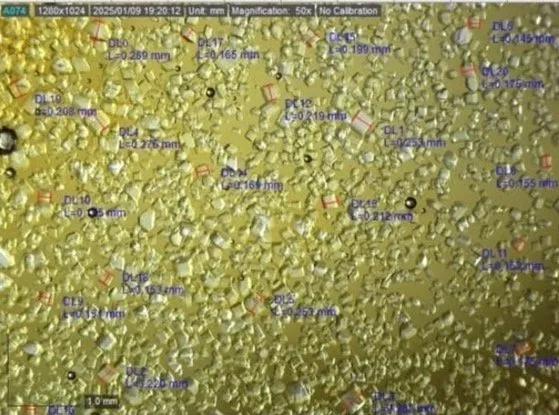
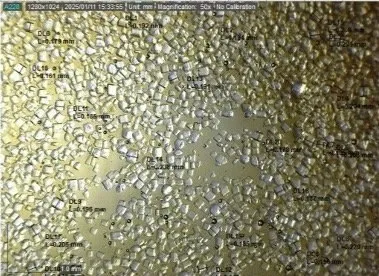
Crystal quality was evaluated by taking massecuite samples during and after the batches and observing them under a microscope. The comparison showed that SeedMaster-4 produced a more uniform C seed crystal population. The SeedMaster-controlled batch did not show the oversized crystals observed in the traditionally controlled batch, and the formation of fines was avoided through careful supersaturation control.
This is especially important for C seed magma production, because poor seed quality can negatively affect the following crystallization stages. A more uniform seed population supports more stable downstream operation and better overall C-side performance.
| Parameter | Traditional control | With SeedMaster-4 |
|---|---|---|
| Crystallizer | C2 batch vacuum crystallizer, 60 t | Same crystallizer |
| Product | C seed magma | C seed magma |
| Target crystal size | 0.22 mm | 0.22 mm |
| Feeding strategy | Periodic syrup and water addition | Continuous syrup feeding |
| Water use during crystallization | Intermittent water addition for washing fines | No water used |
| Supersaturation profile | Peaks into labile zone | Stable controlled profile |
| Condensate outflow | 41–53 m³ per batch | 27–31 m³ per batch |
| Average condensate reduction | — | 18 m³ per batch |
| Steam/condensate reduction | — | 38.3% |
| Crystal quality | Fines and oversized crystals observed | More uniform crystals |
Conclusion
This case demonstrates the value of SeedMaster-4 in C seed magma production. By replacing traditional periodic feeding and water correction with continuous syrup feeding and supersaturation-based control, SeedMaster-4 stabilized the crystallization process and avoided spontaneous nucleation.
The most significant measured benefit was the reduction of condensate outflow by 38.3%, indicating a major improvement in thermal efficiency. At the same time, microscopic analysis confirmed improved crystal uniformity and the elimination of the typical quality problems caused by uncontrolled nucleation.
For the customer, the result was not only lower steam consumption, but also a more stable and higher-quality C seed production process. This makes the case a strong example of how SeedMaster-4 can improve both process efficiency and crystal quality in cane sugar crystallization.